
HARDWOOD
Hardwood flooring offers timeless beauty and lasting value that homeowners have cherished for generations. What many don't realize is that "hardwood" encompasses two distinct types—solid and engineered—each with unique characteristics suited to different applications. Understanding the difference helps you choose the right option for your home.
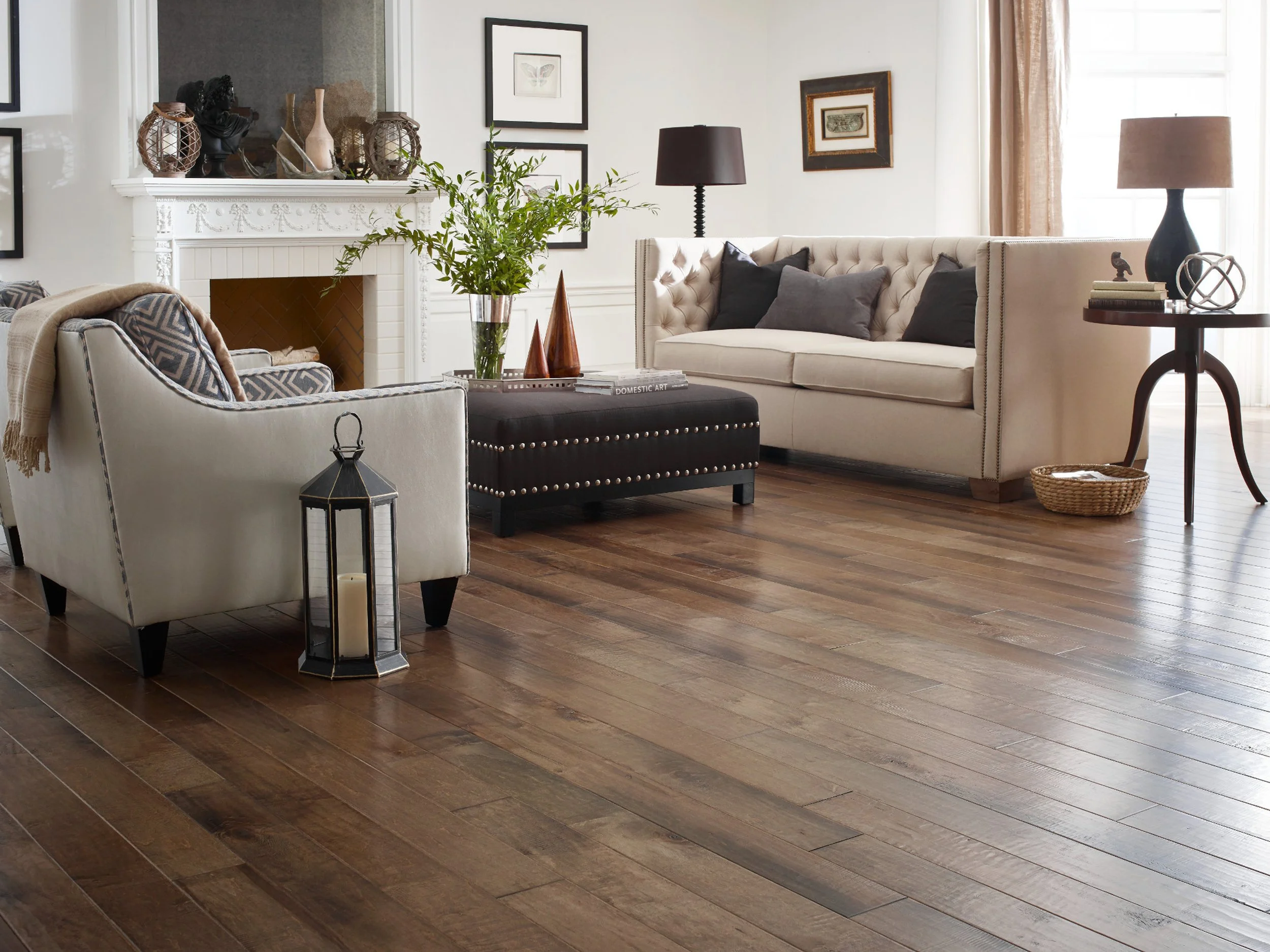
SOLID
Solid hardwood is milled from a single piece of wood, making each plank 100% natural hardwood from top to bottom. This construction allows solid hardwood to be sanded and refinished multiple times throughout its lifespan—often lasting 50-100 years or more. You'll find two main finish options in today's market: traditional unfinished hardwood that's sanded and finished on-site after installation, and prefinished hardwood that arrives with factory-applied finish. Unfinished allows complete customization of stain color and sheen, while prefinished offers faster installation and durable factory finishes with aluminum oxide protection. Both perform beautifully when properly installed and maintained in appropriate environments.
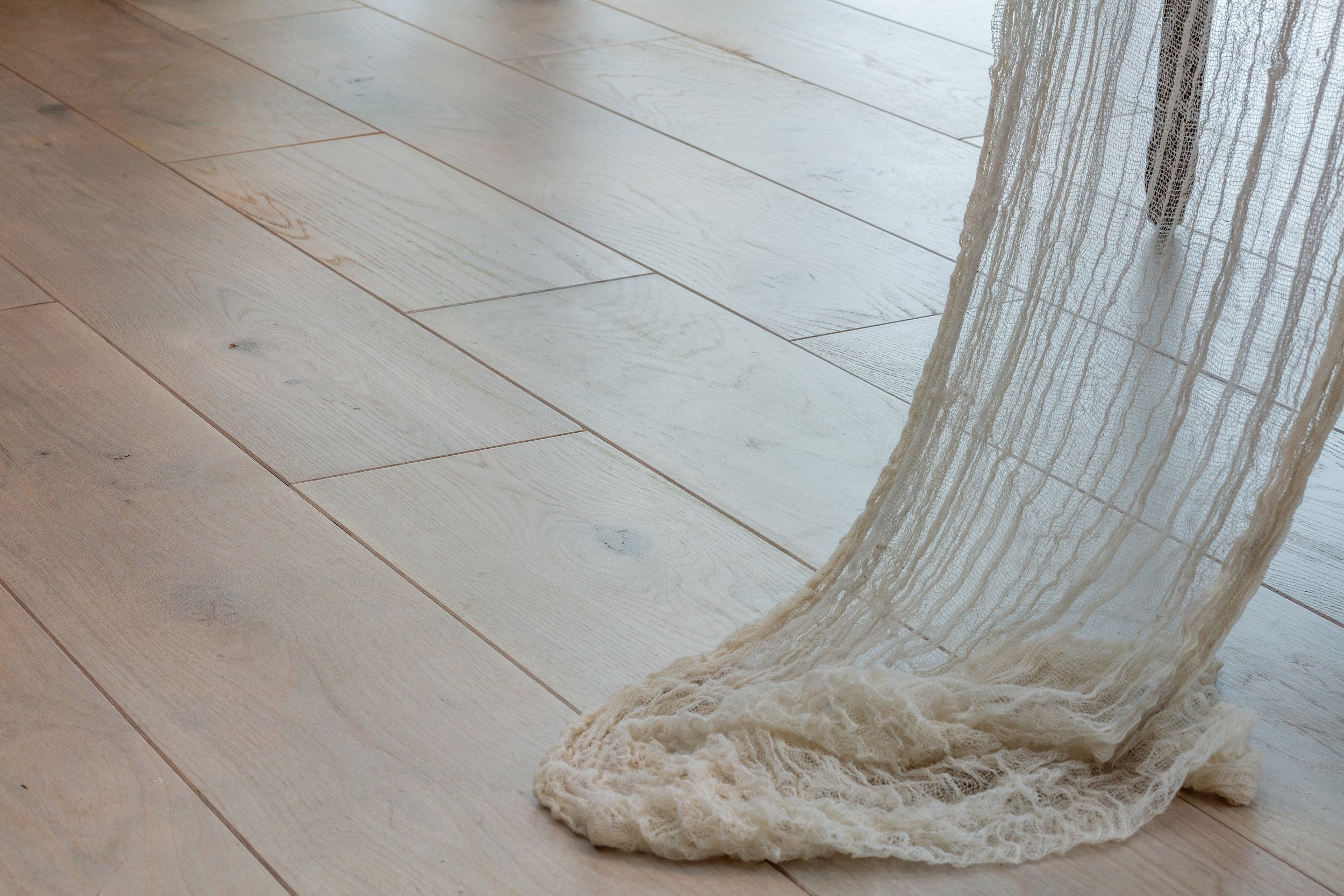
Engineered Hardwood
Engineered hardwood features a real hardwood veneer (typically 2-6mm thick) bonded to multiple layers of plywood or high-density fiberboard arranged in a cross-grain pattern. This construction provides dimensional stability that solid hardwood cannot match, making engineered wood resistant to expansion and contraction from temperature and humidity changes. Engineered hardwood opens possibilities that solid wood doesn't—installation over concrete slabs, in basements, and in areas with greater moisture fluctuation. It's available in extra-wide planks, longer lengths, and diverse species and textures. While engineered hardwood can still be refinished (depending on veneer thickness), it offers fewer refinishing opportunities than solid wood. The trade-off is enhanced stability and versatility for challenging installations throughout your Northern Colorado home.
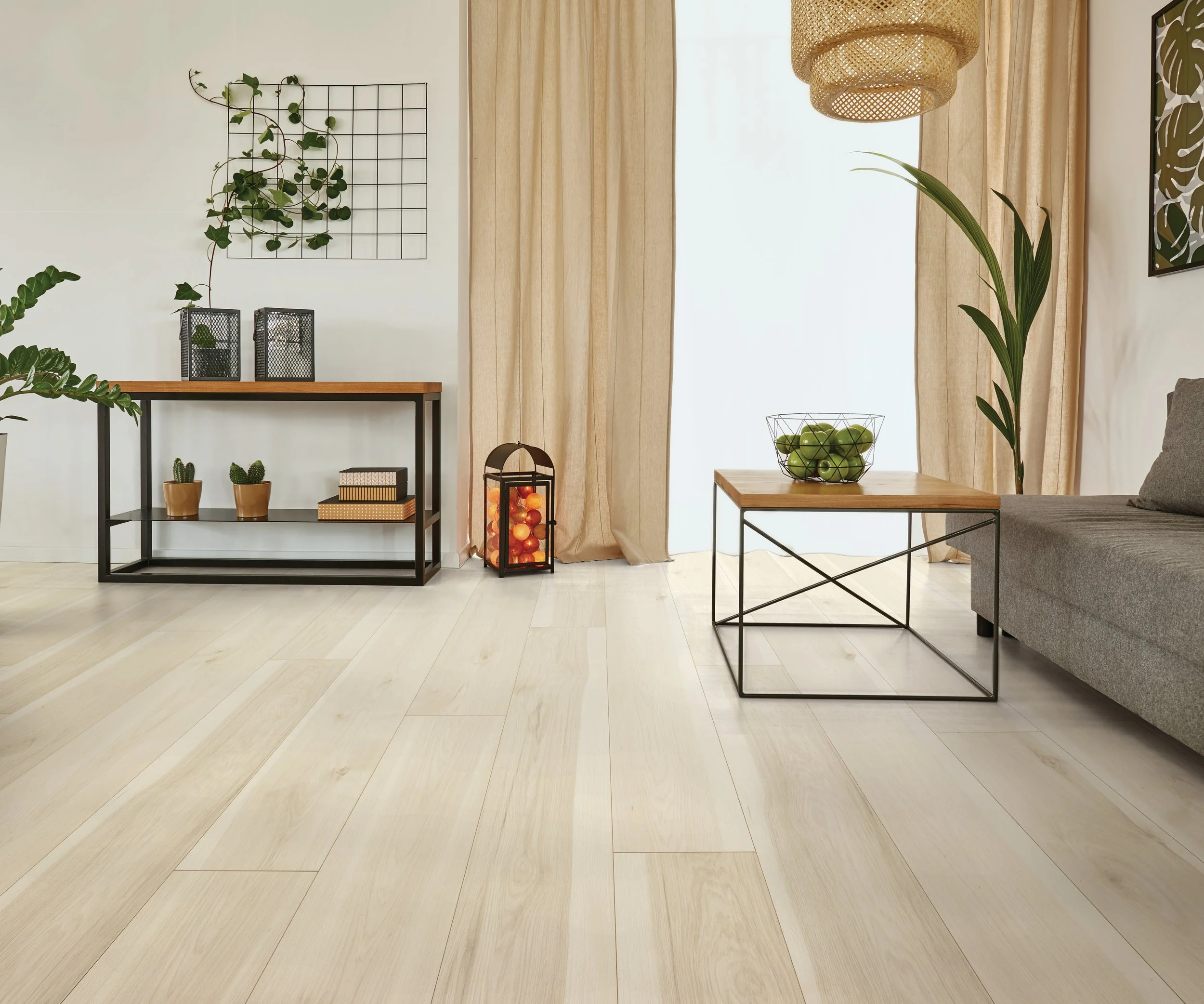
LAMINATE
Laminate flooring features a high-resolution photographic image of wood (or stone) protected by a clear, durable wear layer, all bonded to a dense fiberboard core manufactured under extreme pressure. Modern laminate has evolved dramatically—today's products offer impressive realism, durability, and performance that rivals more expensive materials. Laminate resists scratches, fading, and general wear better than many hardwoods, making it ideal for active households. While laminate isn't waterproof like LVP, water-resistant options now exist for moderate-moisture areas. Laminate feels firmer underfoot than hardwood due to its compressed core construction, though quality underlayment significantly improves comfort and sound dampening. For Fort Collins, Loveland, and Greeley homeowners seeking attractive wood-look flooring at accessible prices, laminate delivers excellent value when installed in appropriate climate-controlled spaces.
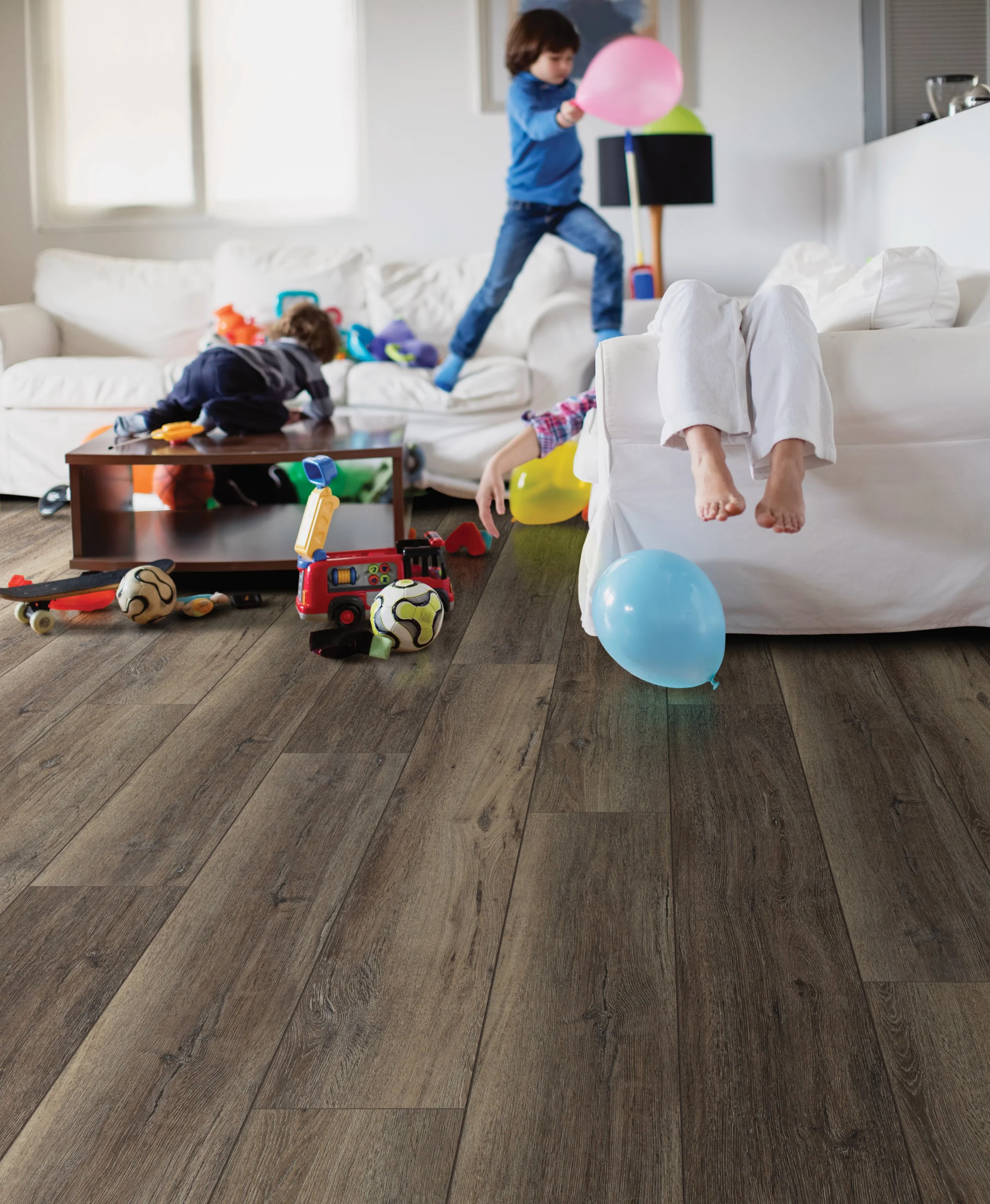
LVP (LUXURY VINYL PLANK)
LVP and WPC (Water Proof Core) represent the latest evolution in resilient flooring technology, and they've exploded in popularity for good reason. LVP stands for Luxury Vinyl Plank, while WPC refers to the waterproof core construction that many premium LVP products feature. Both are completely waterproof—not just water-resistant—making them ideal for kitchens, bathrooms, basements, and busy households with pets or children. Modern LVP replicates hardwood with remarkable realism through high-definition printing, embossed textures, and varied plank widths. The rigid core construction (SPC - Stone Plastic Composite, or WPC - Wood Plastic Composite) provides stability, durability, and comfort underfoot. LVP installs as a floating floor over existing subfloors, works beautifully over concrete, and performs in environments where hardwood would struggle. The variety available means there's an LVP solution for virtually any design vision and application. Contact us to explore which LVP options best suit your specific project needs and lifestyle.